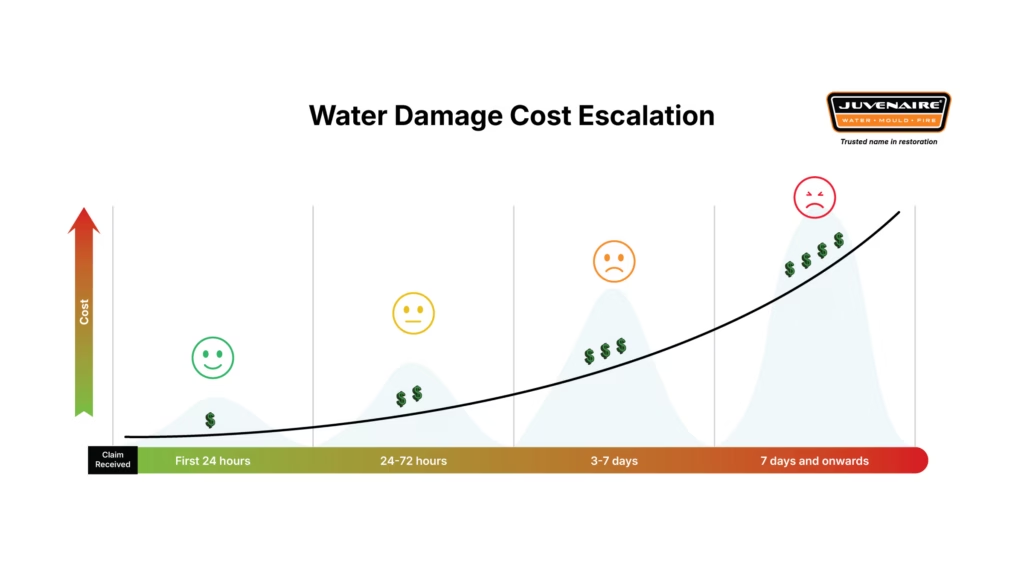
When an escape of liquid occurs, damage to building materials can begin almost immediately. The longer moisture remains untreated, the greater the risk of swelling, deterioration, delamination and mould growth. The following timeline outlines how water damage can progressively affect common building materials and why prompt action is essential to minimise further damage.
0–4 hours: Water begins penetrating carpet, underlay, plasterboard, insulation, timber, cabinetry and other porous materials. Electrical systems may become unsafe, and moisture can begin spreading beneath flooring and into concealed cavities.
4–24 hours: Plasterboard may soften, timber may swell or cup, particleboard and MDF may expand, and laminate or veneer finishes may begin lifting. Carpet may stretch or delaminate, adhesives may soften, dyes may bleed and metal surfaces may begin corroding.
24–48 hours: Moisture can spread further into wall cavities, subfloors, insulation and adjoining rooms. Swelling, distortion, staining and delamination become more apparent. Musty odours may develop, and the risk of mould growth increases significantly where materials remain wet. Drying wet materials within approximately 24–48 hours greatly reduces the likelihood of mould growth.
48–72 hours: Microbial growth becomes increasingly likely, particularly in warm and humid conditions. Carpet underlay, plasterboard, insulation and other porous materials may become more difficult to restore. Corrosion, adhesive failure, timber movement and deterioration of cabinetry can continue.
3–7 days: Visible mould may develop on plasterboard, timber, contents and concealed surfaces. Flooring may buckle or cup, plasterboard may sag or crumble, removal of skirting boards maybe required, cabinetry may remain permanently swollen, and persistent odours may develop. The amount of demolition and replacement required is likely to increase.
1–4 weeks: Extensive concealed mould contamination may develop within wall cavities, ceilings, insulation and under flooring. Materials may suffer permanent deformation, staining, delamination, corrosion and loss of strength. Items that were initially restorable may require removal and replacement.
Months if untreated: Ongoing moisture can result in persistent mould and odour, progressive corrosion, timber decay, coating failure and permanent deterioration of building materials and contents. Hidden contamination may continue spreading and can reappear after cosmetic repairs if the moisture source and affected materials have not been properly addressed. Items that were initially restorable will most likely require removal and replacement.
Important: Water damage arising from sewage, flooding or other contaminated sources requires immediate professional assessment, containment and remediation. Site attendance should occur as soon as practicable and, where possible, within 72 hours of the loss. Early intervention helps minimise secondary damage to building materials, improves the likelihood of successful restoration and reduces overall repair costs. Where water damage remains untreated beyond this period, material deterioration, microbial growth and the scope and cost of repairs can increase rapidly.
Note: The rate of deterioration will vary depending on the water source, contamination level, materials affected, temperature, humidity and the extent of moisture migration.