Why the first 24 hours can make the difference between restoration and replacement.
Once a fire has been extinguished, it is easy to assume that the immediate threat has passed. Unfortunately, fire and smoke damage can continue long after the flames are out.
Smoke, soot and corrosive residues can begin attacking surfaces, metals, electronics, cabinetry, fixtures and contents within hours. At the same time, water and foam used to extinguish the fire may remain trapped within flooring, walls, ceilings, insulation and cabinetry, creating another source of potentially serious damage.
This is why time is your enemy following a fire.
The longer smoke residues, soot, moisture and contaminants remain untreated, the greater the potential for staining, corrosion, persistent odours, material deterioration and secondary damage. Items that may have been successfully cleaned and restored immediately after the fire can become significantly more difficult—or uneconomical—to restore as time passes.
The First 24 Hours Are Critical
An Emergency Fire Make-Safe should commence as soon as the property is safe to enter. The objective is not to complete the entire restoration immediately; it is to stabilise the property, control further damage and protect as much of the building and its contents as possible.
Early intervention can include securing the property, extracting firefighting water, controlling moisture, establishing containment, removing loose soot and smoke residues, protecting sensitive surfaces, mitigating corrosion, relocating unaffected contents, assessing HVAC contamination and beginning appropriate odour-control measures.
The sooner these actions commence, the greater the opportunity to restore rather than replace.
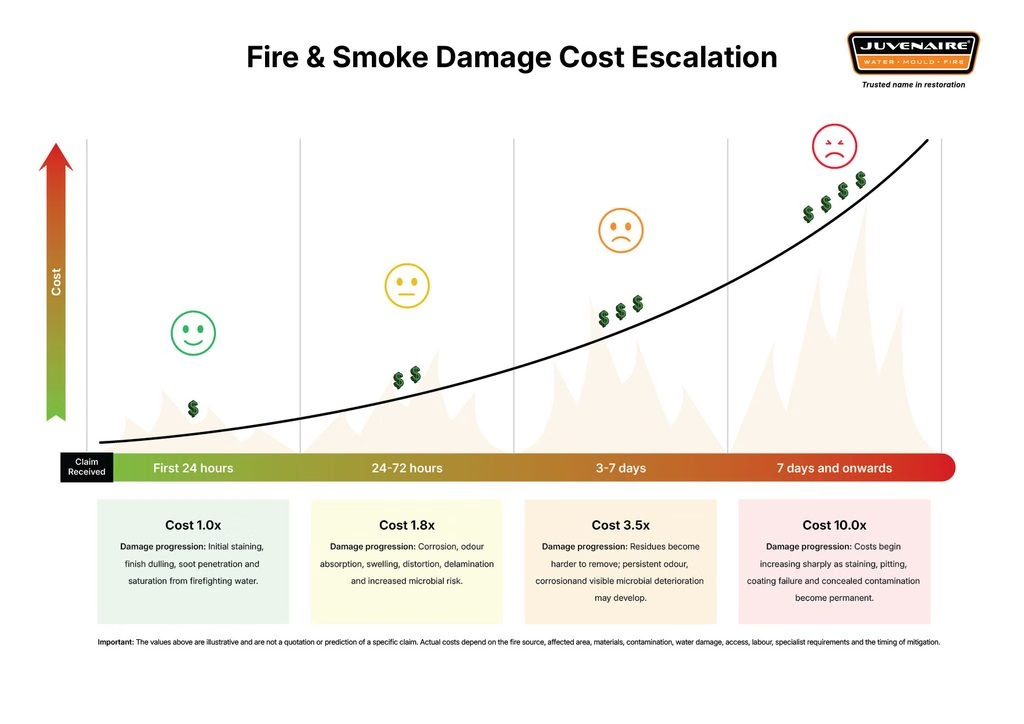
Fire Damage Timeline — Time Is Your Enemy
4–24 Hours
Soot and smoke residues may begin staining cabinetry, benchtops, tiles, fabrics and other surfaces, while sensitive finishes can begin to dull or discolour. Corrosive residues may start affecting metals and electronics. Firefighting water and foam can saturate flooring, plasterboard, insulation, cabinetry and contents.
24–72 Hours
Corrosion can become increasingly evident on window frames, door frames, metal fixtures, appliances and other metal surfaces. Smoke odours penetrate further into porous materials, while the probability of permanent staining increases. Wet building materials may swell, distort, delaminate or lose adhesion. Where suppression water remains uncontrolled, the risk of microbial growth also increases.
3–7 Days
Smoke and soot residues can become increasingly difficult to remove and odours may become deeply embedded. Corrosion can continue on metals, fixtures and electronic components. Persistent odours may develop within porous contents and concealed building areas. Wet materials may begin showing visible microbial growth or deterioration.
1–4 Weeks
Staining, pitting, coating failure and concealed contamination may become permanent. Smoke residues and odours can remain trapped within wall cavities, ceiling spaces, insulation and air-conditioning systems. Materials and contents that may initially have been restorable could now require replacement because the difficulty, risk or cost of restoration has increased.
Months If Left Untreated
Recurring smoke odours, progressive corrosion, premature electronic failure, permanent finish damage and concealed contamination can continue long after the original fire. If the source of the contamination has not been properly removed, smoke odours and residues may reappear after painting, rebuilding or operation of the air-conditioning system.
Emergency Fire Make-Safe
What should happen within the first 24 hours?
A professional Emergency Make-Safe may include:
1. Site Safety & Initial Assessment
Assess the affected areas, identify immediate hazards and determine priorities for stabilisation and restoration.
2. Secure & Weatherproof the Property
Protect openings and exposed areas against weather, unauthorised entry and further damage.
3. Containment & Air Control
Separate fire-affected areas from unaffected areas, protect access pathways and minimise the transfer of soot and contaminants into clean areas.
4. Standing Water Removal & Moisture Control
Extract firefighting water, assess wet flooring, plasterboard, insulation, cabinetry and contents, and install appropriate drying and dehumidification equipment.
5. Emergency Smoke & Soot Cleaning
Prioritise cabinetry, benchtops, tiles, windows, doors, fixtures and other sensitive surfaces at risk of permanent staining, tarnishing, etching or corrosion.
6. Emergency Corrosion Mitigation
Inspect and treat window frames, door frames, metal fixtures, appliances, tools and other affected metal surfaces. Electronic equipment should remain isolated until appropriately assessed.
7. Contents Protection
Identify and protect valuables, documents, electronics, sentimental possessions and other priority contents. Unaffected contents can be relocated away from contaminated or wet areas.
8. Air-Conditioning Assessment
Keep potentially affected HVAC systems switched off until inspected. Check accessible vents, grilles, filters and return-air points for smoke contamination and isolate duct openings where necessary.
9. Initial Odour Control
Remove charred materials, contaminated debris and other primary odour sources before beginning appropriate air filtration and controlled deodorisation.
Why an Emergency Make-Safe Matters
Early action can significantly reduce the extent and cost of secondary fire damage. An Emergency Make-Safe can:
- Reduce permanent staining and discolouration of cabinetry, benchtops, tiles, walls, ceilings and contents.
- Limit corrosion to window and door frames, metal fixtures, appliances and electronics.
- Reduce the penetration of smoke and soot residues into porous materials.
- Minimise the spread and absorption of persistent smoke odours.
- Improve the likelihood of restoring affected materials and contents rather than replacing them.
- Control firefighting water and reduce swelling, distortion, delamination and deterioration.
- Reduce the potential for mould and microbial growth in wet building materials.
- Prevent soot and residues from being transferred into unaffected areas.
- Address residues before they become increasingly difficult to remove.
- Reduce the potential for latent damage and premature failure of electrical and electronic equipment.
- Shorten the overall restoration process and potentially reduce repair and replacement costs.
- Help return the property to a safe, clean and usable condition sooner.
When the Fire Is Out, Restoration Should Begin
The first few hours following a fire can have a significant impact on what can ultimately be saved.
Fast intervention protects the property. Early cleaning protects surfaces. Moisture control protects the structure. And professional restoration can mean the difference between cleaning and replacement.
Fire Damage? Don’t Wait.
Contact Juvenaire for an Emergency Fire Make-Safe and Restoration Assessment.